Size ChartsJeansShoesBrasSwimwearHandbagsSunglassesJewelryBaby
FragranceBeddingCookingEntertainingIronsRugsSlipcoversVacuumsLuggage
  Cooking Guide Cutlery Stand Mixers Cookware

Cutlery Guide:
What to look for | Know your knife | Buying a set | Types of knives | Knife care

Sharpen your knowledge!
A good knife is the most important part of a kitchen. Even a master chef can prepare a delicious meal with inferior pots and pans, but a bad knife just won’t do for any cook. The right knife is an essential ingredient for a well-stocked kitchen.

What to look for when buying knives:
The carbon count. The most important thing you’ll want to look for in a knife is that it’s high in carbon steel. Carbon adds strength to the stainless steel and helps to make the blade sharper. Plus, stainless steel won’t rust!

Stainless steel knives are a great alternative to carbonated steel because they are resistant to rust and strong enough to maintain a sharp edge. Plus, they are much less expensive than the carbonated stainless steel.

Feel is everything! Hold the knife in your hand, and see how it feels to you. You’ll want it to be comfortable. Make sure it has a good grip and feels balanced. The handle should be riveted to the blade for security.

Get a handle on knives! Also, you’ll want to look at the handles. Knives will either have a composite or wood handle. Many cook choose knives with plastic or composite handles because they are easier to maintain and are dishwasher safe. Wooden-handle knives, on the other hand, require a bit more maintenance, and need to be hand washed.

Heavyweight champs! Another feature to note is the weight of the knife. A heavier knife will have a better balance through the pivot point where the handle meets the blade.


Know your knife!
To choose the best cutlery, you need to first speak the language. Here are the basic parts of a knife:
Point – the piercing part of the blade where it comes to an end.
Tip – the front part of the blade that does most of the cutting and separating. The point is included on the tip. It works great for cutting small or delicate foods.
Edge – the business end of the blade or the sharpened side.
Spine – the end of the blade, opposite the edge.
Heel – the opposite end of the tip where the blade comes into a square shape.
Bolster – the band of steel that helps to bond the blade to the handle.
Tang – the part of the knife that extends into the handle to give it balance.
Scales – a part of the handle that creates a grip.
Butt – the end of the handle.

Back to Cutlery
Back to top

Buying a knife set:
Cutlery can be purchased in individual pieces or as a set. A basic knife set should come with several starter pieces – a paring knife, a chef’s knife, a utility knife, a carving knife and a bread knife. You may find that some sets will also come with scissors and sharpening steel. If your knife doesn’t already come with one, you should get a knife block. It’s the best and safest way to store your cutlery because it protects the blades from nicks and dents.
Types of knifes:
There are quite a few different types of knives. Every knife has a specific use, and you should use the proper knife for every cutting task.
Chef’s knife: because it’s so versatile, this is probably the most popular knife. It’s the one you’d use for everyday chopping and slicing. Paring knife: has a blunt tip and straight edge. This knife is a bit smaller, which makes it great for precision tasks like dicing veggies.
Slicing knife: is used to slice cooked meat. It works especially well for carving a turkey. It has a rounded tip with a very long, straight cutting edge. This long cutting edge enables you to cut large pieces of meat into clean, even slices. Carving knife: is intended for cutting through cooked meat.
Bread knife: just as the name suggests, this knife is great for slicing bread. Because it has a scalloped edge, this knife will cut through soft, fresh bread without tearing or mashing it. Utility knife: is good for cutting almost anything. It’s a good all-around knife. You can cut fruits and vegetables easily with it.
Santoku knife: a great multipurpose knife. It has all the great features of a cleaver and the versatility of a chef’s knife. This knife works very well for mincing, dicing and slicing. Boning knife: a narrow-bladed knife that works very well for removing the bone from meat.
Cleaver: is a very large, heavyweight knife that’s ideal for chopping through meat and poultry with bones in a single stroke. Tomato knife: you guessed it – this knife is great for cutting tomatoes. The serrated edge allows you to slice through the tough skin of a tomato without tearing it.

Back to Buying a Set
Back to top

How to care for your knives:

Keeping your knives nice and sharp is very important. A dull knife usually will cause more injury than a sharp one. All straight-edged knives do need sharpening, but knives with serrated edges do not. Some experts recommend that a knife should be sharpened before each use. At a minimum, you should give your knives a thorough sharpening annually. Always make sure to protect the blades when storing your knives. This is where a knife block comes in handy.

It does matter what type of knife sharpener you use, because the wrong one can actually do more harm than good. Knife sharpening should always take place in a well-lit environment, on a stable surface and by a responsible adult. A sharpening steel works very well on almost all knives. An already sharp knife only requires a few light pressured strokes on the sharpening steel to maintain the sharp edge. If you do not wish to use the steel frequently, additional strokes will be necessary to re-establish a keen cutting edge. Other cooks may prefer to use a sharpening stone. A sharpening stone has two sides: one rough, one fine. It’s used the same way as a sharpening steel.

Depending on the type of handle your knives have, you may not want to put them in the dishwasher. Even if your handles are dishwasher safe, the knives can knock against other items, which causes nicks in the blade. Washing by hand is usually recommended.

A wooden cutting board is always the best surface to cut on. Harder surfaces like glass and metal can dull the blade. However, some cooks prefer not to use wooden cutting boards because the wood can hold bacteria more easily than plastic ones. In this case, polypropylene boards make a great substitute.

Back to Knife Care
Back to top

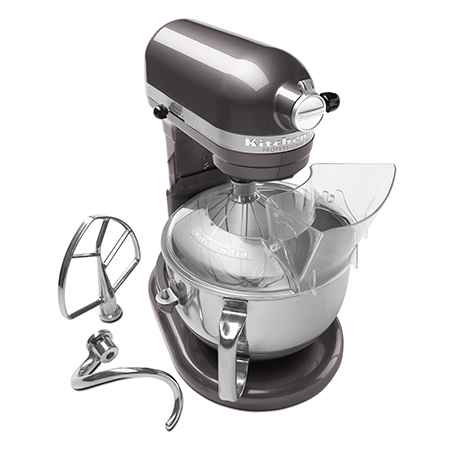
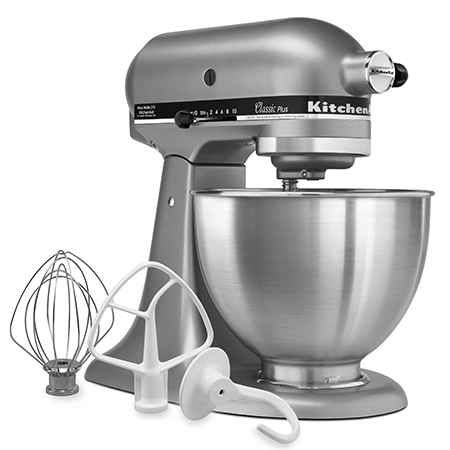
Stand Mixer Guide:


Professional
Mid-Range
Basic
Model
Professional 6™
# KP26M1X
Professional 5™ Plus
# KV25GOX

Heavy Duty

# K5SS

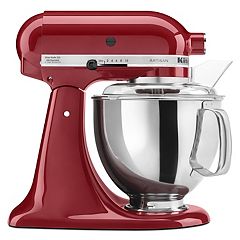
Artisan™

# KSM150PS

Classic Plus

# KSM75

Classic

# K45SS

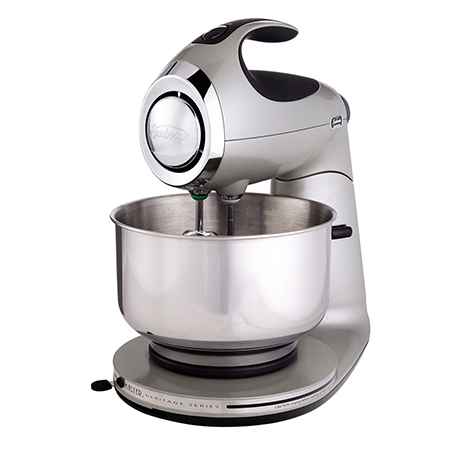
Photo

Great for… Frequent use! Professional grade. Heavy mixing. Professional grade. Mixing double batches of heavy dough. Routine mixing, like cake batter. Occasional mixing needs. Occasional mixing needs.
Quarts

Speeds
10
10
10
10
10
10
Motor (watts)

Heavy-duty transmission


Weight (lbs.)

25

25

29.4

22.8

26

22

Unique mixing action


Soft Start™


Soft Start™


Tilt-up head      

Bowl Lift™

     
Ergonomic handle


Pouring shield


Flat beater

Wire whip

Dough hook

Accepts additional attachments

Back to Stand Mixer Guide
Back to top

Cookware Guide:

Cookware Materials | Material Comparison Chart Types of Handles
Cookware Shapes Building Your Cookware Set FAQs

We've taken the heat out of shopping for cookware.
Our product guide will help you find the perfect ingredients.

Get cooking! Easier said than done, isn't it? Great cookware is one of the best investments you can make, but with so many choices, how do you know what you're supposed to use? Breathe easy. We're making it a little less intimidating. First, think about the kind of cooking you want to do, how many people you'll be cooking for and your level of expertise. Build your collection by choosing the basics, then by adding all the specialty pans your little heart desires.

Whatcha' got cookin'? Nothing if you don't have the proper material. The number one thing to look for in a great cookware set is the construction. No single metal is ideal for all types of cooking applications. Each has its advantages and disadvantages. An essential quality you should look for in all cookware is weight. A heavy pot or pan will sit securely on the burner. Just make sure it's light enough for you to lift easily.

With that said, here are the main ingredients for selecting the type of material your cookware is constructed of.

Types of Cookware Materials:
Aluminum
Aluminum is probably the most popular material in cookware with lots of upsides. It is an excellent heat conductor that spreads heat evenly throughout the pan. And the thicker the aluminum, the more evenly the heat spreads. Aluminum can be anodized to harden the surface. Hard-anodized cookware is harder than steel and is extremely durable. Plus, aluminum is dishwasher safe. It's also relatively inexpensive compared to other materials. The downside? Untreated aluminum is prone to staining and reacting with foods. For this reason, we recommend aluminum with a nonstick interior because it's much less likely to discolor or react with foods.
Carbon Steel
Carbon Steel can produce both the most expensive cookware or the least expensive. Maintained like cast iron, but lighter in weight, it's good for cooking that requires quick heat changes because it maintains temperature well. The most common pans made out of this material are Woks or Stir-Fry pans. It's rare in a lot of other cookware because stainless steel provides the same function, without the high maintenance.
Cast Iron
Cast Iron is very thick and heavy duty. Although it is slow to heat up, cast iron has the ability to retain and evenly disburse heat. This means that it's an excellent choice for browning, drying, braising, stewing, slow cooking and baking foods. Cast iron comes in either bare iron or with enamel coating. Bare iron needs to be "seasoned" before it is used. To season it, thoroughly wash and dry the pan, lightly rub shortening on the surface and bake it in the oven at 300 degrees for about 60-75 minutes. The seasoning process will give your pots and pans a nonstick surface that lasts forever! Once your pots and pans are seasoned, you should avoid soaking and washing them with soap. The best way to clean is to just wipe it with a cloth (you actually want to leave the grease on them). Enamel-coated cast iron provides all the benefits of cast iron, but it requires less maintenance and cleanup is easier.

However, some foods do not cook well in cast iron. Acidic foods will react with it
and will strip off the coating. If that should happen, don't panic, just season your
pan again!
Ceramic
Ceramic cookware is a great insulator, so it does not react quickly to heat. It can usually be found in the form of a casserole dish or other shapes that are great for cooking slowly at constant temperatures. It's lighter than cast iron, but it is also more fragile. It can be characterized under different categories, including: porcelain, stoneware and earthenware.

Porcelain, the strongest of the three, is fired to become very hard and durable. This type can usually be used on the stove, in ovens and microwaves.

Earthenware, on the other hand, is less strong and often prone to chipping and scratching. Decorative and very pleasing, this type of material is often used as serveware.

Clad
Clad cookware is developed by using two types of cookware materials together to get all the benefits of both materials. Most of the time, stainless steel is clad with aluminum. This gives you the thickness and excellent heat conductivity of aluminum and the easy-to-maintain, corrosion resistance of stainless steel. Quality clad cookware will last through a lifetime of cooking, so if you're looking for true investment pieces, then this might be your best material. The downside of this type of cookware is that it is generally heavy and expensive.
Copper
Copper is the very best conductor of heat. Because of this, it is especially great when cooking on top of the range where the food must be cooked at precisely controlled temperatures. Copper can, however, react with foods and be toxic in large amounts. Therefore, copper pots and pans are usually lined with another material like stainless steel. Traditionally, they were lined with tin, but the tin tended to wear out too quickly. The biggest disadvantage of using copper cookware is the maintenance. Copper can discolor from being air dried and washed in a dishwasher. Polishing it will remove the discoloration. Also, copper dents and scratches easily.
Stainless Steel
Stainless Steel is a very good all-around general-purpose cookware. It's lightweight, durable and easy to care for. Plus, it won't corrode or tarnish, and its nonporous surface is resistant to wear. It is, however, a poor conductor of heat and does not distribute heat evenly. Because of this, many stainless steel pots and pans are made with a copper or aluminum disc in the bottom to help absorb more heat evenly. Because of its smooth surface, stainless steel is easy to clean and maintain. Plus, it's dishwasher safe. If discoloration occurs, a stainless steel cleanser can be used to restore the natural luster. Stainless steel is great on the range top or in the oven. If your application calls for changes in the temperature while cooking, it's the perfect choice! Metal utensils can be used on stainless steel or aluminum surfaces.
Nonstick
Nonstick cookware has a coating on the interior surface that makes it difficult for foods to stick to it. This makes it very easy to cook healthy, nonfat foods. Plus, since foods don't stick to the surface, cleanup is a breeze! Nonstick cookware can be found in combination with many metals that produce cookware. There is, however, one disadvantage to nonstick cookware. The nonstick coating can be easily scratched. Stainless steel or other metal utensils can scratch the surface. Nylon utensils are recommended when cooking with this type of surface.

Back to Cookware Materials
Back to top

Types of Handles
Get a handle on cookware. There are three basic types of handles:

Riveted
Riveted: is the sturdiest type of handle. In this application, the handle is permanently applied to the pot or pan with rivets.

Welded
Welded: just as the name implies, the handles are welded onto the pot or pan, which provides a smooth interior. This is not as durable as a riveted handled.

Screwed on
Screwed on: yep, you guessed it — plastic handles are screwed to an exterior part of the pot or pan. This type of handle is less secure than a riveted handle. However, it does provide a smooth interior cooking surface. Plus, if the handles do come loose, you can easily screw them back on with a screwdriver!

Back to Cookware Handles
Back to top

Materials Comparison Chart:


Material
Advantages
Disadvantages
Uses
Aluminum
Heats up fast and evenly; dishwasher safe; inexpensive.
If untreated, it may stain easily and react with foods. Great for general-purpose cooking.
Copper
Heats up very fast and evenly.
May react with food; discoloration from water; dents/scratches easily.
Ideal for cooking delicate sauces.
Stainless Steel
Lightweight; durable; easy to clean/maintain; doesn't corrode or tarnish; won't scratch.
Doesn't conduct heat as well as other materials.
Good for general-purpose cooking — especially stir-frying.
Cast Iron
Thick and heavy duty; won't scratch; spreads heat evenly.
Doesn't conduct heat as well as other materials; reacts with acidic foods if it's not coated.
Perfect for browning and frying.
Nonstick
Easy to clean, great for cooking low-fat foods.
Scratches easily.
Best for low-fat cooking without much oil.

Back to Materials Chart
Back to top

Shapes That Suit Your Needs
Basic Specialty
After you've determined which material best suits your needs, it's time to get your cookware in tip-top shape. Use this list as a general guide to determine which pans best suit your cooking needs. Don't worry, you'll be a master chef in no time, or at least you can pretend to be!
Basic
Braiser/Casserole — Known as the everyday pan. With shallow, sloped sides, wide construction and short side handles, this pan is designed to fit easily in the oven. It's ideal for dishes that are started on the stove and finished in the oven.
Fry Pan/Skillet — All-purpose. This pan has moderately high, slightly flared (outward sloping) sides. This makes it great for all kinds of cooking. It's good for frying chicken and hash browns. Nonstick versions are wonderful for omelettes and fish. Choose a metal that conducts heat evenly such as lined copper, stainless steel-wrapped aluminum, anodized aluminum or cast iron.
Omelette Pan — A type of fry pan. It has a flat surface, sloped sides and flared edges that allow foods to slide easily out of the pan. Choose a metal that conducts heat evenly such as lined copper, stainless steel-wrapped aluminum, anodized aluminum or cast iron. Nonstick construction also works well.
Saucepan — Your kitchen essential. Straight or slightly sloping, higher sides and a long handle distinguish this pan. It can be used to cook delicate sauces, re-heat leftovers and cook sticky grains like rice and oatmeal. Should be made of materials that are excellent conductors of heat, like copper or aluminum, for even distribution.
Soup/Stockpots — As wide as it is high with a thick base for slow simmering. The height and surface area allow for minimum evaporation for perfect flavoring and locked-in ingredients. It's perfect for stews, soups and pastas. Go ahead, you can even try a lobster. Stainless steel with an aluminum core or disc on the bottom or anodized aluminum are the best materials.
Specialty
Chef — Want the most efficient pan for whisking? This is the one to look for. Gently sloped sides make it ideal not only for whisking, but also for stirring. And the flat bottom creates even heating. Perfect for all kinds of tasty sauces and delicious risotto recipes.
Pasta Pot — Tall, relatively narrow pasta pots are ordinary stock or sauce pots with pasta inserts. This insert eliminates the need for a colander to drain the pasta. It's also handy for blanching vegetables or draining other foods.
Double Broiler — Love to make delicate chocolates or sauces? This pan is your best bet. Functioning as two pans in one, a smaller pan sits in a larger pan that is partially filled with water. It uses this indirect heat to ensure that food in the top pan is cooked gently, without scorching.
Egg Poacher — Eat a lot of eggs? Like them poached? This little contraption will make it easy. There are removable cups that are inserted into a pan so eggs maintain their round shape. Using this pan cooks eggs to your desired taste.
Griddle — Characterized by low sides, this type gives optimal access to the entire cooking surface of the pan. It comes in many shapes, including: rectangular, square and circular. Its flat surface makes it ideal for pancakes, toast, eggs and much more. Larger versions can also sit over more than one burner.
Grill Pan — Be a lean, mean grilling machine with this pan. Its ribbed surface raises food, so fats drain away. It also has channels around the edges that serve to collect the cooked-off fat. Perfect for steaks and hamburgers. You can also find varieties that have dual surfaces — flat and with ridges. Like a griddle, larger can sit over more than one burner, making it perfect for bigger families or entertaining.
Paella Pan — Originally used to cook the Mediterranean dish paella, this pan can be used to prepare a variety of sautés and casseroles. It's characterized by its wide, flat bottom, rounded sides and in most instances, loop handles. The elegant and functional design is wonderful for serving at the table.
Pressure Cooker — Save time! Pressure cookers cook food at higher temperatures without burning. You can save up to 75% off the normal time that it takes to cook dishes. Risotto, which would normally take 45 minutes, only takes 7 with a pressure cooker. Beef stew, normally 70 minutes, only takes 15. Plus, it's a healthy way to cook because food cooks evenly and nutrients are locked inside.
Sauté Pan — Similar to a fry pan, but with higher, straighter sides, the sauté pan is also extremely versatile. Its flat bottom and deeper sides allow food greater contact with the heat source, so cooking is quicker. It can be used for anything from sautéing meats to frying chicken to grilling sandwiches. Choose a material that conducts heat quickly and evenly, such as lined copper, stainless steel-wrapped aluminum or anodized aluminum. Nonstick surfaces are not preferred.
Stir-Fry/Wok — Popular and all-purpose. What more can we say? The high slopping sides have a bowl-like appearance and give you lots of control and versatility while cooking. It allows for fast and easy rotating, so you can cook perfectly, enhance flavor and retain nutrients. It can also have a flat or rounded bottom depending on which heat source you are using. Flat bottoms are best with electric burners and round are best with flame burners.

Back to Shapes
Back to top

Building Your Cookware Set
So now you've got material and shapes covered. What's next? Here's a little info that might help you start your cookware set from the ground up, or help build on what you already have.
FOR THE BEGINNER
Chances are, if you're just starting out on your own, you have limited cooking experience and need efficient and cost-effective solutions for your cookware needs. When starting off, it is important to buy the basics. You'll want to get the most use of the least amount of pieces. Look to invest in three major pieces — a fry pan or a sauté pan, a stockpot and a saucepan. You'll get the most use out of the least amount of materials. Try the following to get you started:

KitchenAid® Hard-Anodized
12-in. Fry Pan

Cooking With Calphalon™
6-qt. Stockpot

Revere Ware® Copper Clad™
3-qt. Covered Saucepan
FOR THE TRANSITION
A busier lifestyle and more cooking experience find you in this category. You've experimented with cooking, have discovered your needs and maybe even have more mouths to feed. Now you can start bulking up your cookware collection. Think about adding things like a chef's pan, a griddle or a wok. Determining the next pieces all depends upon your lifestyle and your cooking preferences. Don't be afraid to mix and match pieces and materials. No one said you had to buy the same style for every pan.

Cooking With Calphalon™ Stainless 2-qt. Chef's Pan

Circulon® Classic
10" x 18" Griddle

China Village® Pro-Weight™
14-in. Wok
FOR THE GOURMET
Well rehearsed in the fine art of dining, you've now developed a passion for great food and great cookware. If you have your basic pieces and a couple of specialty pots and pans, this is when you can begin to grow your collection. Now it gets fun! Really. You can create tons of fun dishes and recipes with specialty items like a paella pan, a pressure cooker, a roaster, a fondue set and more. The possibilities are limitless!

Mexican Fiesta® Nonstick Paella Pan

Wilton® Chef's Advantage™ Roasting Pan

Manttra 8-qt.
Pressure Cooker Set

Back to Building Your Set
Back to top

Frequently Asked Questions
Can pots and pans be put in the dishwasher?
Many of the different surfaces may be safe in the dishwasher, but hand washing them will add to your cookware's longevity. Always double check with the manufacturer's cleaning guidelines.

Is a heavier pot/pan always better than a lighter one?
Top of the line cookware is usually heavier than cheaper brands. The heavier a pot/pan is, the more secure; it will sit evenly on the stove top. However, you do need to be able to lift it off the burner with ease. If it's too heavy for you, it could cause other hazards.

Is there one material for cookware that is recommended above the others?
Each type of material can be very beneficial depending on your specific cooking application. No one type is universally the best. They all have advantages and disadvantages.

What type of utensil works the best with cookware?
This depends on the material your cookware is made of. Nonstick surfaces will scratch easily and should be used with nylon or wooden utensils. Copper, aluminum and stainless steel are very scratch-resistant, and could be used with metal utensils.

Should I purchase pots and pans separately or in a set?
It depends on your needs. In general, sets can save you some money and give you the best deal for the best price. You can put together a list of all the items you need. If they are included in a set, that might be your best bet. If it includes pieces you'll never use, you might want to consider whether purchasing individual pieces will be less costly than a complete set. Remember, each pan serves a particular purpose, so it might be easier to assemble a great collection by purchasing various pots and pans.

Every time I cook, food sticks to the interior of the pan or the pan is sticky. What's the problem?
It could be that you have the heat turned up too high. Quite a few people do this. High is not always the best option. Food should be heated gently and heat should be turned down as soon as the food reached the optimum cooking temperature.

I have spots or staining on the interior of my stainless steel pans. What is this?
Some food and water contain acids and salts that can cause subtle and minor corrosion to cooking surfaces. To solve this, add salt to dishes only when water is boiling to prevent it from settling on the bottom of the pan. Another reason may be that the pan was overheated. This type of corrosion can be removed by using a stainless steel cleaner.

What does it mean when you see stainless steel is 18/10?
The 18 refers to the percentage of chromium that is found in the steel. It's important because it helps to fend off corrosion. The 10 refers to the percentage of nickel in the piece. This also fights against corrosion and gives items a shiny look. You can also find 18/8 stainless steel.

What pans are best for ceramic cooking tops?
For the proper heating elements in a ceramic stove top to function optimally, use pans with flat bottoms. For more information, consult your stove top manufacturer's guidelines and recommendations.

What are the main features I should look for in cookware?
Heavy-gauge construction is a primary feature in great cookware. If it's not thick enough, it's not going to conduct heat properly. Other features include: stay-cool, oven-safe handles, even-heat conductivity and a non-reactive cooking surface. Always be sure to look for features that meet your individual cooking needs.

Back to FAQs
Back to top